
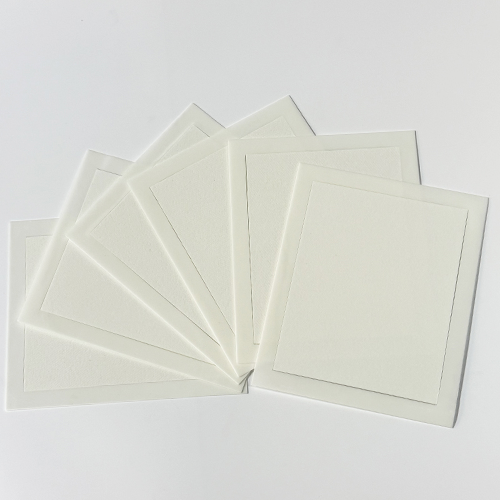
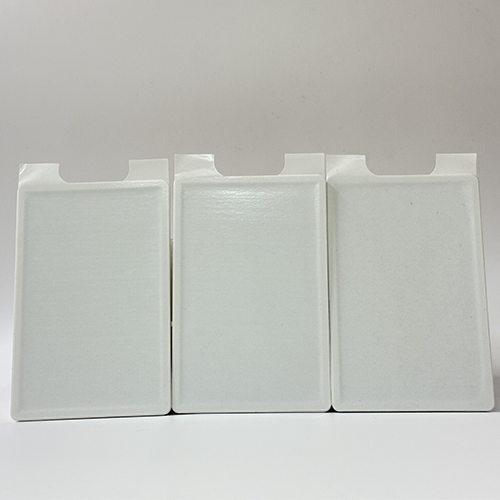
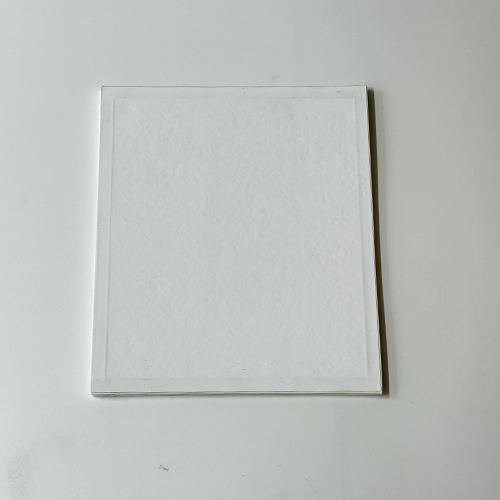
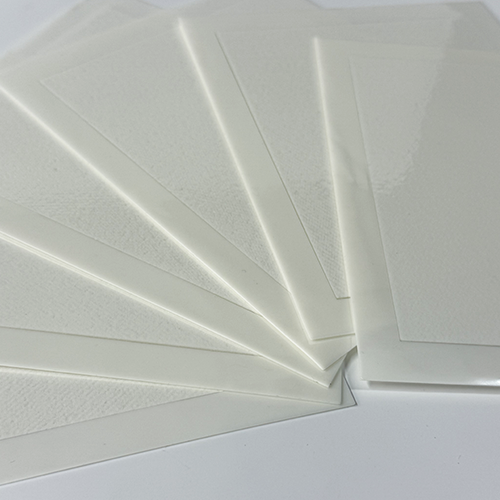
Silicone Frame Aerogel Insulation Sheet for Battery Safety
This flexible thermal barrier combines a silica-aerogel insulation core with a silicone frame and PET/PI encapsulation films. Designed for energy-storage battery packs, it helps slow heat transfer between cells while providing compression resilience and flame-retardant protection.
1. Chemical Name
Silicone Frame Aerogel Thermal Insulation Sheet
2. Product Model, Performance, and Specifications
The specifications and performance indicators of the Silicone Frame Thermal Insulation Sheet For Energy Storage Batteries are listed in Table 1
| Item | Standard Requirement / Test Value | Reference Standard |
| Color | White | — |
| Thermal Conductivity (@ 25°C) | ≤ 0.023 W/m·K | GB/T 10295-2008 |
| Thermal Conductivity (@ 500°C) | ≤ 0.03 W/m·K | GB/T 10294-2008 |
| Thermal Conductivity (@ 800°C) | ≤ 0.036 W/m·K | GB/T 10294-2008 |
| Thermal Conductivity (@ 500°C alternate test) | ≤ 0.072 W/m·K | GB/T 10294-2008 |
| Bulk Density | 0.16–0.2 g/cm³ (Test value: 0.18) | GB/T 5480-2017 |
| Silicone Compression Strength (60A, compressed 25%) | 1.23 MPa | GB/T 7757-2009 |
| Silicone Compression Strength (60A, compressed 30%) | 1.53 MPa | GB/T 7757-2009 |
| Porosity | ≥ 98% (Test value: 99.6) | GB/T 10299-2011 |
| Moisture Absorption | ≤ 1.0% (Test value: 0.62) | GB/T 5480-2017 |
| Max Service Temperature | ≤ 650°C (continuous) | GB/T 17430-2015 |
| Flame Rating | V0 | UL-94 V0 |
Table 1: Performance Specifications of Silicone Frame Thermal Insulation Sheet
The specifications and performance indicators of the Encapsulation Film for the battery industry are listed in Table 2
| Film Type | Thickness | Performance | Material Category |
| PET Hot-Melt Film | 0.05 mm / 0.08 mm | Heat resistance (≈180°C) | Thermosetting reactive adhesive |
| PI Film | 0.05 mm / 0.10 mm | Heat resistance (≈350°C) | High-temperature reactive composite |
| PI Composite Foil | 0.15 mm | Heat resistance (≈650°C) | Ceramic-reinforced composite |
Table 2: Performance Specifications of Encapsulation Film
3. Composition Information
Silica aerogel insulation core; silicone frame; PET/PI encapsulation film
4. Key Features
Excellent insulation performance: Ultra-low thermal conductivity, highly effective thermal barrier.
Soft and flexible: Easy to bend and process, suitable for complex assembly spaces.
Waterproof and hydrophobic: No moisture absorption, maintains stability in humid environments.
High compressive resilience: Provides superior cushioning and compression resistance.
5. Applications
The silicone aerogel thermal pad is mainly used for thermal insulation and protection of new energy vehicle battery cells and modules.
When a single cell experiences thermal runaway, the thermal pad can effectively block heat transfer and delay propagation between cells, helping maintain system stability.
At the same time, it provides insulation, buffering, and flame-retardant properties.
6. Quality Assurance
- Test Conditions: Unless otherwise specified, testing should be done at 23±2°C and 50±5% RH.
- Test Items: Refer to Table 1 above.
- Acceptance Criteria:
- If all test results meet the table requirements, the material is qualified.
- If appearance or thickness fails, the material is disqualified.
- If any other item fails, repeat with double samples. If failure persists, disqualify the batch.
- Test Methods: As per values in Table 1and Table 2.
7. Delivery Preparation
- Packaging and Labeling
- Protective Packaging: Each box should be packaged in moisture-resistant materials unless otherwise specified.
- Boxing: Boxes should be made from rigid materials like wood or corrugated cardboard.
- Inspection Report: Each batch must include a performance test report.
- Box Labeling must include:
- Batch number or product name
- Specifications and quantity
- Production date
- Transportation and Storage
Avoid heavy pressure or impact during transport. Store in a clean, dry, ventilated area. Max stack: 3 layers.
8. Remarks
- Intended Use: Suitable for battery insulation, buffering, and electrical insulation.
- Each box should include a Certificate of Conformance with:
- Manufacturer name and address
- Product code/name
- Specs and quantity
- Production date and batch
- Packaging/shipping requirements


Reviews
There are no reviews yet.