
Understanding Aerogel: Technical Fundamentals, Performance Advantages, and Modern Applications
A deep technical exploration of silica aerogel materials, covering thermal mechanisms, fire performance, structural characteristics, and application trends across industrial, construction, and EV battery sectors.
As global industries pursue greater energy efficiency, stricter fire safety, and aggressive sustainability goals, advanced insulation materials have moved to the center of engineering innovation. Among them, silica aerogel stands out as a premier solution due to its exceptional thermal, structural, and environmental properties.
This article provides a technical deep dive into aerogel materials—how they function, why they outperform conventional insulation, and where they are shaping the future of global thermal-protection systems.
1. What Is Aerogel? A Nano-Scale Architecture
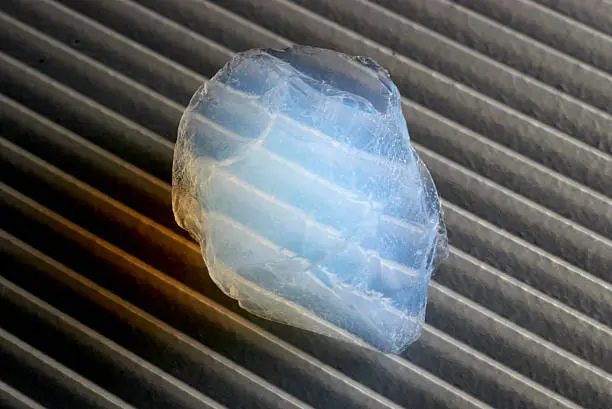
Often described as the “lightest solid in the world,” aerogel is technically a nanoporous silica structure containing more than 90–98% air by volume. Created through a sol-gel process followed by supercritical drying, the result is a highly effective, sponge-like network of interconnected silica particles.
The Power of Nano-Pores
Aerogel consists of pores ranging from 2 to 50 nanometers. This unique structure drastically minimizes heat transfer across all three mechanisms:
- Conduction: Solid pathways are extremely limited by the sparse silica matrix.
- Convection: Nanopores are smaller than the mean free path of air molecules, restricting gas movement.
- Radiation: The nano-network effectively scatters thermal radiation.
Mechanical Reinforcement
Pure aerogel is fragile. To make it viable for industrial-scale installation, modern manufacturing enhances its durability through fiberglass reinforcement, ceramic fiber integration, polymer film-forming coatings, and composite layering techniques. These improvements make aerogel blankets flexible, tear-resistant, and robust.
2. Thermal Mechanism: Achieving 0.021 W/m·K
Thermal conductivity (k-value) is the definitive parameter for insulation materials. While traditional materials like mineral wool, PU foam, and EPS typically range from 0.030 to 0.045 W/m·K, high-performance aerogel blankets achieve an astonishing 0.021 W/m·K.
This makes it one of the most efficient commercially available insulation materials. In applications where space is constrained, aerogel’s efficiency becomes a critical engineering advantage:
- High thermal efficiency with minimal material thickness
- Drastically reduced heat loss for industrial pipelines
- Maximized usable space and energy efficiency in buildings
- Superior thermal stability in compact EV battery packs
3. Fire Performance: A Benchmark for High-Safety Materials
With high-rise building fires, EV thermal runaway, and industrial accidents driving global safety concerns, fire-resistant materials are non-negotiable. Aerogel is inherently inorganic, non-combustible, and high-temperature resistant (withstanding temperatures **>650°C**).
Advanced aerogel composite materials, such as those developed by SkyBoys, reach UL94-5VA—the highest level of the UL94 vertical burn classification.
Insulation Material Fire Performance Comparison
| Material | Combustibility | Melting Behavior | Smoke/Toxicity | Fire Rating |
|---|---|---|---|---|
| PU Foam | Highly flammable | Melts | High | Poor |
| EPS/XPS | Flammable | Melts | Medium | Poor |
| Mineral Wool | Non-combustible | Stable | Low | Good |
| Aerogel Composite | Non-combustible | No melt | Low | UL94-5VA |
This flawless fire profile ensures aerogel is ideal for critical applications like building façade fire barriers, curtain wall gap sealing, EV battery thermal barriers, and industrial fireproof compartments.
4. Low Dust-Drop & Long-Term Stability: A Manufacturing Breakthrough
Older generations of aerogel suffered from two major setbacks: brittleness and excessive dust release. Modern production technologies have successfully engineered these flaws out of the material.
The chemical film-forming process developed by SkyBoys represents a major breakthrough, achieving:
- Ultra-low dust-drop (crucial for cleanrooms and precision assembly)
- Enhanced fiber bonding and tensile strength
- Reduced edge breakage during installation
- Superior bending resistance
These advancements make modern aerogel highly suitable for precision battery manufacturing, cleanroom environments, high-end architectural applications, and long-distance pipeline projects.
5. The 3 Fastest-Growing Fields for Aerogel Adoption
Aerogel materials are rapidly displacing legacy insulation across three major sectors:
Industrial Insulation
High-temperature operations require materials that do not crack, shrink, or degrade over time.
- Applications: Steam pipelines, heat-transfer oil systems, LNG/cryogenic pipelines, chemical reactors, and removable insulation covers.
- Benefits: Reduced energy loss, extended equipment lifespan, better temperature uniformity, and significantly lower total maintenance costs.
Building & Construction
Stricter global building codes demand next-generation energy efficiency and fire safety without adding architectural bulk.
- Applications: Façade insulation, roof systems, fire-stop gaps, prefabricated buildings, and cold-bridge elimination.
- Benefits: Ultra-thin and lightweight profiles, UL94-5VA fire performance, non-toxic sustainability, and a lifespan that matches the building itself.
EV Battery & Energy Storage
Driven by the urgent need to mitigate thermal runaway incidents, the EV sector is currently the fastest-growing market for aerogel.
- Applications: Cell-to-cell thermal pads, module insulation layers, pack-level firewalls, and battery safety panels.
- Benefits: Delays thermal runaway propagation, maintains structural integrity under direct flame, reduces heat diffusion, and ensures compliance with stringent global EV fire regulations.
6. Why Aerogel Will Dominate Future Insulation Standards
The global insulation industry is being pushed forward by three macro-trends, all of which align perfectly with aerogel’s capabilities:
- Net Zero Goals: Aerogel drastically prevents energy waste, directly supporting corporate and governmental carbon reduction mandates.
- Stringent Fire Regulations: High-density urban environments and high-capacity lithium-ion batteries demand uncompromising, non-combustible protection.
- Lightweight & High-Performance Design: The push for miniaturization and efficiency means engineers need materials that do more with less volume.
Conclusion: The Next Evolution in High-Performance Insulation
From industrial petrochemical pipelines to EV battery packs and modern urban skylines, aerogel is redefining what insulation can achieve. Its unique blend of ultra-low thermal conductivity, UL94-5VA fire performance, environmental safety, and structural durability makes it the most advanced commercial insulation available today.
As energy systems, urban infrastructure, and mobility platforms continue to evolve, aerogel will dictate the new standard. Companies that integrate aerogel technologies into their designs today will secure a decisive technical and competitive advantage for the future.